Independent navigator · small business · Ukraine
Fewer guesses.
More decisions
that pay back.
We work through what costs businesses money for lack of knowing the rules: tax ceilings, settlement deadlines, grant conditions, choosing a provider. With figures, a check date and a caveat attached.
Finance
Ukraine's sole-trader ceiling — and the day after you cross it
Crossing the ceiling is not a fine, it is a regime switch: 15% on the excess, the general tax system from the first day of the next quarter, filing by the 20th.
Read it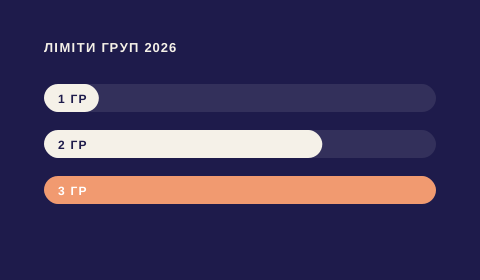
Ukraine's sole-trader ceiling — and the day after you cross it
Crossing the ceiling is not a fine, it is a regime switch: 15% on the excess, the general tax system from the first day of the next quarter, filing by the 20th.
Contracting a provider: seven clauses that decide who keeps the accounts and the code

Reservation of employees: the threshold rose to UAH 25,941 and the old figure is still everywhere
Employee or contractor: UAH 158k against 108k for the same take-home

SEO or Google Ads: not which is better, but what you are testing

Sole trader or LLC: the question is not tax, it is what you answer with
Most comparisons open with tax. Tax is the least important difference.
Ukraine's VAT threshold is a rolling twelve months, not a year
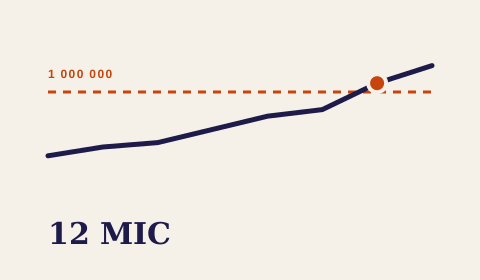
Annual income inside your group ceiling proves nothing: the VAT counter measures a different period over different operations.
Ukraine's sole-trader ceiling — and the day after you cross it
The ceiling is visible months ahead. Trouble finds the people who saw it and did nothing.
Reservation of employees: the threshold rose to UAH 25,941 and the old figure is still everywhere
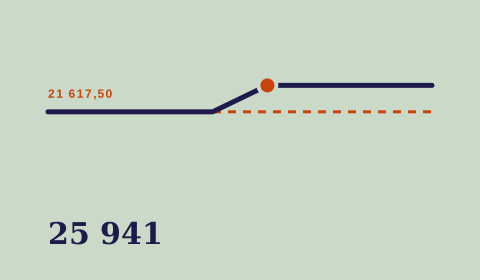
Half the sites still show UAH 21,617.50. For most enterprises that number expired sixteen days ago.
Employee or contractor: UAH 158k against 108k for the same take-home
The gap is large enough that the question almost always settles itself. The trouble starts afterwards.

Gig contract or sole trader: 10% against 6%, and who actually pays
The rates look similar until you check who carries the social contribution and who carries the risk.
SEO or Google Ads: not which is better, but what you are testing
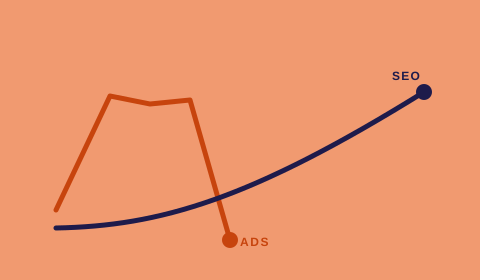
Arguing which is more effective is pointless: they are tools for different jobs at different stages.
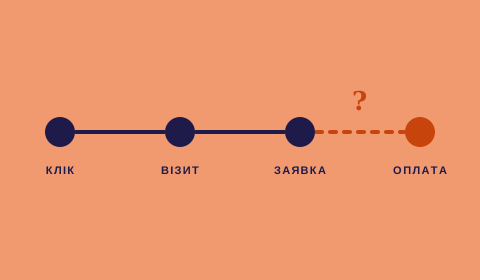
End-to-end analytics: the one link it builds, and when it is not worth paying for
Most implementations start by choosing a platform. They should start by asking which decision you would make differently once you can see the data.

Cost per customer, not per click: why the ads "work" and the profit does not
The most expensive report an agency can send is the one where everything is green and the account is empty.

First export: the document checklist, and the date nobody counts
The most expensive mistake in a first export is not a missing document but a date nobody put in the calendar.
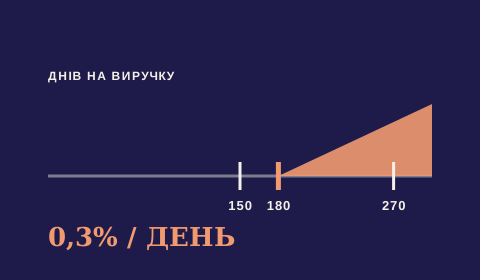
180 days to collect export proceeds — and why your neighbour has 270
The clock starts at shipment, not at signature. Most people learn this when the bank starts asking.

Grant or subsidised loan: free money that costs more than borrowing
"Free" and "no strings" are not the same thing, and the difference is measurable in money.

Vlasna Sprava 2.0: up to UAH 2.5m, with three years of strings
The amounts went up noticeably. So did the cost of failing the conditions.

CRM: five signs the spreadsheet already costs more than a system
A spreadsheet does not break in one moment. It quietly gets more expensive, until someone forgets to call back the client with half a year of budget.
Contracting a provider: seven clauses that decide who keeps the accounts and the code
A contract usually sets out in detail what the provider will do. Almost never what stays with you once they leave.
Run the numbers
Is your ad spend
paying back?
Three figures show what each unit of spend returns. It is the same arithmetic any conversation about an advertising budget should start from.
Editorial position
Why this is
usable
Every figure is dated
Ukrainian tax ceilings track the minimum wage, settlement deadlines change by regulation mid-year, and grant terms get rewritten seasonally. So each number carries a check date and a caveat rather than the look of a permanent truth.
Ratings we stay out of
We score providers on six verifiable criteria and deliberately appear in none of the lists. Placement is not for sale. Disclosure and methodology are separate pages.
Is your case harder
than an article?
The articles describe the general mechanics. Working through your specific situation is a separate advisory practice with a fixed timeline and a document at the end. It is kept apart from the editorial side and never enters a rating.
See the practices